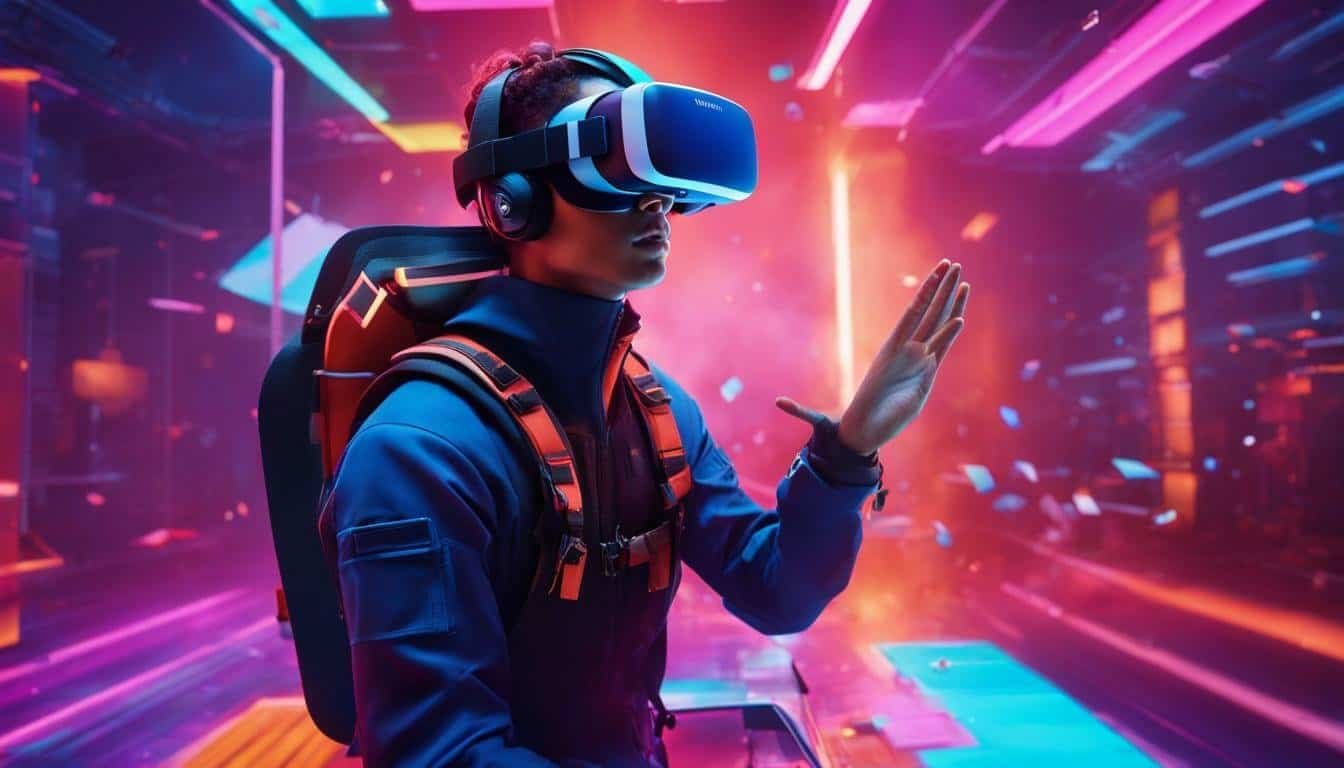
Welcome to "Mastering Non-Developer VR Design: A User-Friendly Guide." In this section, we will delve into the fascinating realm of virtual reality design and explore how non-developers can excel in this field.
Key Takeaways:
- Non-developers can become proficient in virtual reality design
- Virtual reality design focuses on creating accessible and appealing experiences
- UI/UX considerations play a crucial role in VR design
- Understanding the VR design process is essential for beginners
- Various tools are available to assist non-technical designers
Designing User-Centered VR Experiences: Principles and Best Practices
In this section, we will explore the key principles and best practices for designing user-centered VR experiences. By understanding the challenges and opportunities in VR design, we can create immersive and engaging experiences for all users.
When it comes to VR design principles, one of the fundamental aspects is to consider the unique perspectives of users. By putting ourselves in their shoes, we can better understand their needs, preferences, and limitations. This empathy-driven approach allows us to create VR experiences that are inclusive and accessible to users of all backgrounds and abilities.
Clear visual cues play a crucial role in designing user-centered VR experiences. In the virtual environment, users rely heavily on visual feedback to navigate and interact with the surroundings. Therefore, it's important to provide visual cues that guide users, whether it's highlighting important objects or indicating the next step in a game's progression. By using visual cues effectively, we can enhance the user experience and prevent confusion or frustration.
Designing for emotional engagement is another important aspect of user-centered VR experiences. By incorporating storytelling techniques and creating meaningful narratives, we can evoke emotions and forge a deeper connection with users. Whether it's excitement, fear, or empathy, leveraging emotions in VR design can leave a lasting impact on users and make the experience more memorable.
As designers, we must also consider the physical comfort of users. VR experiences can sometimes cause motion sickness or discomfort due to the disconnect between virtual and physical movements. Ensuring a comfortable and immersive experience involves designing movements and interactions that feel natural and intuitive. By minimizing the risk of motion sickness and discomfort, we can create VR experiences that users can enjoy for longer durations without any adverse effects.
Summary:
In summary, designing user-centered VR experiences requires a deep understanding of users' perspectives, clear visual cues, emotional engagement, and physical comfort. By following these principles and best practices, we can create VR experiences that are inclusive, engaging, and accessible to all users, regardless of their technical background.
| Key Principles | Best Practices |
|---|---|
| Consider users' perspectives | Design for inclusivity and accessibility |
| Provide clear visual cues | Guide users effectively through the virtual environment |
| Design for emotional engagement | Incorporate storytelling techniques and meaningful narratives |
| Ensure physical comfort | Create natural and intuitive movements and interactions |
Conclusion
In conclusion, mastering non-developer VR design is an exciting journey that requires a user-centered approach and a deep understanding of the VR design process. By following the principles and best practices discussed in this guide, beginners in VR design can confidently create immersive and user-friendly experiences for all.
Designing virtual reality (VR) experiences that are accessible and appealing to a wide range of users is crucial in today's VR gaming landscape. As the adoption of VR continues to grow, there is a need for designers to address the challenges that come with the medium. These challenges include overwhelming virtual environments, nonintuitive gameplay, physical discomfort, and lack of immersion.
Experts in the field emphasize the importance of creating VR games that are honest, inclusive, safe, understandable, aesthetically pleasing, shapeable, consistent, meaningful, accessible, and sensitive to the capabilities of the medium. User-centered design principles play a significant role in achieving these goals. Taking into consideration the perspectives of users, providing clear visual cues, incorporating storytelling and improvisation, and designing for emotional engagement are key factors to keep in mind.
By approaching VR design with a user-centered mindset, beginners can create engaging and immersive experiences that cater to a diverse audience. Understanding the VR design process, implementing the principles and best practices discussed in this guide, and being mindful of UI/UX considerations will pave the way for successful non-developer VR design endeavors.
FAQ
What is non-developer VR design?
Non-developer VR design refers to the process of creating virtual reality experiences without requiring advanced programming or coding skills. It focuses on designing VR experiences that are accessible and appealing to a wide range of users, regardless of their technical background.
Why is user-centered design important in VR?
User-centered design is crucial in VR because it ensures that the experiences are tailored to meet the needs and preferences of the users. By considering users' perspectives, incorporating clear visual cues, and designing for emotional engagement, designers can create immersive and intuitive VR experiences that are enjoyable and meaningful.
What are some challenges in VR design?
VR design comes with its own set of challenges, including overwhelming virtual environments, nonintuitive gameplay, physical discomfort, and lack of immersion. Designers need to address these challenges by creating VR games that are honest, inclusive, safe, understandable, aesthetically pleasing, shapeable, consistent, meaningful, accessible, and sensitive to the capabilities of the medium.
What are the key principles of designing user-centered VR experiences?
The key principles of designing user-centered VR experiences include creating honest and inclusive games, ensuring safety and understandability, focusing on aesthetics and meaningfulness, allowing for shapeable experiences, maintaining consistency, and being accessible and sensitive to the capabilities of the VR medium.
What tools and software are used in non-developer VR design?
Non-developer VR design often utilizes various tools and software, including VR design software, user interface (UI) design tools, and user experience (UX) design tools. These tools help designers create and refine virtual reality experiences, taking into account factors such as visual design, interaction design, and overall user experience.