

What if the key to a more sustainable future isn’t a new technology, but a grass that’s been growing for millennia?
This versatile material has evolved from an eco-friendly trend into a core material for construction, consumer goods, and hospitality markets across the globe. Demand continues to rise every year, creating a vast network that connects growing regions with buyers on every continent.
Navigating this complex global trade requires specific knowledge. This ultimate guide breaks down the complete ecosystem, from sourcing to final delivery. It provides actionable information for any business seeking a reliable, sustainable alternative to traditional timber.
Companies like Smartcrop, based in Davie, FL, exemplify this expertise. Specializing in Commercial Bamboo Farming and Wholesale distribution, they show how local U.S. operations support this international movement.
Key Takeaways
- Global demand for this renewable resource is increasing annually across major industries.
- Understanding its procurement process is essential for businesses committed to sustainable sourcing.
- This guide is designed for retailers, distributors, and bulk buyers navigating international markets.
- The plant’s rapid growth makes it a superior, renewable alternative to slow-growing timber.
- Moving this product involves a network of farmers, processors, shippers, and officials across continents.
- Unique challenges exist in maintaining quality, managing costs, and ensuring regulatory compliance during transport.
- U.S.-based experts can provide crucial support for integrating this material into your operations.
Understanding the Global Bamboo Supply Chain Landscape
A quiet revolution in material science is reshaping how industries source their building blocks. Over recent years, this renewable resource has moved from specialty markets to mainstream adoption worldwide.
China dominates as the primary producer. All FSC-certified forests for this material originate there. This establishes the nation as the central hub for global procurement.
The Rise of Bamboo as a Sustainable Resource
Engineered bamboo wood products now compete directly with traditional timber. They offer comparable performance with superior environmental credentials. This shift is driven by the plant’s rapid growth and renewability.
Key suppliers have expanded operations across Southeast Asian countries. Vietnam, Thailand, and Indonesia are major sources. This diversification gives international buyers more options.
Key Drivers in Global Bamboo Sourcing
Market forces include stricter environmental regulations and corporate sustainability goals. Consumer preference for eco-friendly goods also pushes demand. The depletion of hardwood forests adds urgency.
The procurement process requires specialized knowledge of species and regional capabilities. Companies like Smartcrop provide this expertise. They offer sustainable alternatives for businesses seeking responsible materials.
Understanding different supplier tiers is crucial for cost and quality balance. This knowledge helps firms navigate the complex global marketplace effectively.
Mastering Bamboo Supply Chain Logistics
Securing a quality product is only half the battle. Getting it to your site on time and within budget completes the mission. This movement is where a strategic logistics plan proves its value.
Why Logistics Matter in Bamboo Sourcing
This material isn’t shipped like standard goods. Its organic nature requires special handling. Moisture sensitivity and varying dimensions create unique challenges.
A general freight approach often leads to delays and damage. Specialized management anticipates these issues. It ensures smooth customs clearance and protects your investment.
Optimizing Delivery and Cost Efficiency
True cost goes beyond the freight quote. It includes insurance, duties, and potential delay fees. Smart coordination from harvest to final-mile delivery controls these expenses.
Partners with local expertise, like Smartcrop in Davie, FL, add crucial support. They help streamline operations for commercial and wholesale needs.
| Consideration | General Freight Approach | Specialized Logistics Approach |
|---|---|---|
| Cost Focus | Base freight rate only | Total landed cost (fees, duties, insurance) |
| Risk Management | Reactive to problems | Proactive planning for moisture, delays |
| Partner Expertise | General commodity knowledge | Deep understanding of sustainable materials |
A detailed management strategy is non-negotiable. It turns a complex procurement into a reliable process for your project.
Efficient Shipping Methods for Bamboo Products
Moving eco-friendly materials globally presents a critical choice between speed and economy. Selecting the right shipping method protects your budget and meets project deadlines.
Your decision hinges on volume, urgency, and total landed cost. The three main options serve different needs for international buyers.
Sea Freight: Cost-Effectiveness and Volume Considerations
Ocean transport dominates for bulk orders. It is the most cost-effective way to move large volumes across the world.
Containerized shipping takes several weeks. Transit from Asia to the U.S. can take 3 to 7 weeks. Plan inventory well in advance.
Full (FCL) or less-than-container (LCL) loads accommodate various order sizes. This flexibility makes sea freight a staple for most importers.
Air and Land Freight: Speed and Flexibility
Air freight is the solution for urgent or high-value items. It delivers in days, not weeks. This speed comes at a premium, often 5-10 times the cost of sea transport.
Use air for samples, critical replacements, or small, valuable orders. Land transport via truck or rail is ideal for cross-border moves or as the final delivery leg.
It offers a middle ground for reasonable times and cost. Customs processing time varies from days for air to weeks for sea freight.
| Method | Key Advantage | Best For |
|---|---|---|
| Sea Freight | Lowest cost per unit | Large volume, non-urgent shipments |
| Air Freight | Fastest delivery times | Small, urgent, or high-value items |
| Land Freight | Regional flexibility | Cross-border or final-mile delivery |
Proper Packaging and Handling of Bamboo in Transit
Without the right protective measures, a sustainable investment can arrive damaged and unusable. Specialized protocols are non-negotiable for preserving quality across oceans.
Best Practices for Secure Packing
Bamboo wood and finished products need careful wrapping. Use paper or bio-padding to prevent surface scratches.
For stacked items, alternate their direction. Add cushioning layers between them. This reduces movement and pressure points during long journeys.
Secure outer boxes with sturdy strapping. Clear, multi-language labels like “Fragile” guide handlers correctly.
Moisture Control and Damage Prevention
Humidity is the biggest threat. Kiln-drying bamboo before shipping sets a stable moisture baseline.
Inside containers, desiccants absorb ambient dampness. This prevents warping and mold growth over weeks at sea.
For fragile items like trays, use custom-fit inserts or double-boxing. These steps absorb shock and ensure your bamboo arrives in perfect condition.
Navigating International Customs and Compliance
The final hurdle before your sustainable materials reach the warehouse isn’t distance—it’s paperwork. Customs clearance is a complex, variable process that can make or break your timeline.
Essential Documentation and Regulations
Four core documents are non-negotiable for compliance. You need a Commercial Invoice, Packing List, and a Bill of Lading or Airway Bill.
The most critical paper is the Phytosanitary Certificate. It proves the bamboo was treated to be pest-free. Missing it guarantees delays.
Country-Specific Import Guidelines
Rules change at the border. The U.S. demands products be free of soil and live pests. Proper kiln-drying is often mandatory.
The European Union has strict standards for items like kitchenware. Paperwork must confirm food-safe coatings. Using the correct Harmonized System (HS) code is essential. A wrong code triggers inspections.
Processing times range from two days for air freight to several weeks for sea shipments. Submit documents electronically ahead of time. This step provides authorities with advance information.
Working with an experienced supplier familiar with these customs rules is the best defense. They help you navigate the compliance maze and avoid costly hold-ups.
Smartcrop’s Role in Commercial Bamboo Farming and Wholesale Supply
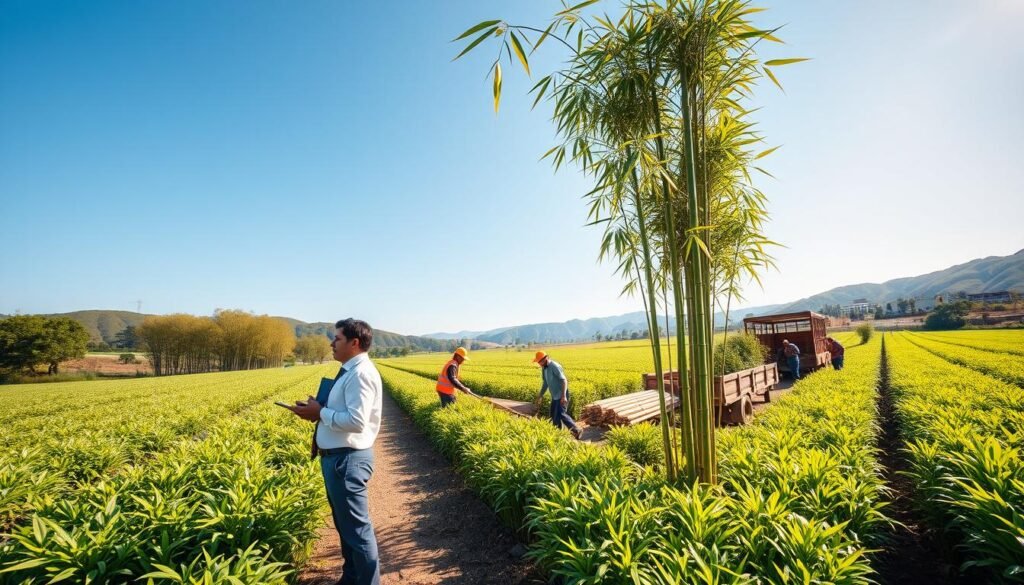
For American businesses, sourcing eco-friendly materials doesn’t have to involve navigating overseas markets and customs delays. A domestic partner like Smartcrop provides a reliable, local solution.
They operate extensive commercial farming and wholesale operations right in Davie, Florida.
Expertise and Local Support in Davie, FL
Located at 2100 SW 154th Ave, Smartcrop serves as knowledgeable suppliers for the southeastern U.S. Their team’s experience covers the full cycle, from cultivation to distribution.
This local expertise is tailored to North American market needs. It helps businesses avoid common international logistics hurdles.
Access to Wholesale Bamboo & Tropical Plants
Smartcrop maintains a diverse inventory of products. This includes wholesale bamboo and tropical plants for landscaping, construction, and retail.
They specialize in providing this material as a sustainable replacement for timber. Their focus ensures quality and supply reliability for commercial clients.
| Factor | International Sourcing | Domestic Sourcing via Smartcrop |
|---|---|---|
| Lead Time | Weeks to months | Significantly shorter |
| Customs Complexity | High risk of delays | Eliminated |
| Supplier Communication | Potential barriers | Direct, local support |
| Supply Chain Risk | Higher volatility | Enhanced stability |
Partnering with established domestic suppliers streamlines procurement. Smartcrop offers flexible orders and consultation to optimize your sourcing strategy.
Contact them at (954) 302-2529 or info@smartcropusa.com. Visit www.Smartcropusa.com to explore their full range and farming expertise.
Overcoming Logistical Challenges in Bamboo Distribution
Even the best-planned procurement strategy can hit unexpected roadblocks during international transport. Successfully navigating these challenges separates reliable operations from unreliable ones.
Whether you’re managing a single project or ongoing programs, time pressure is constant. Proactive identification of obstacles is your first defense.
Managing Delays and Rising Costs
Delays stem from customs holds, port congestion, or weather. Each halt adds time and costs to your project.
Freight rate volatility and fuel surcharges push total landed cost higher. Building buffer time into schedules helps, but carries its own expenses.
Partnering with experienced forwarders mitigates these challenges. They pre-arrange clearances and negotiate rates to control costs.
Ensuring Quality Control During Transit
Maintaining quality over weeks in a container is a major hurdle. Humidity and handling stresses threaten material integrity.
Protocols like pre-shipment moisture testing and using desiccants are essential. In-transit monitoring systems provide early warning.
These steps ensure your delivery arrives in specified condition. Consistent quality control turns distribution challenges into a competitive edge.
Leveraging Technology for Streamlined Bamboo Supply Chain Management
Gone are the days of guessing where your shipment is or when it will arrive. Digital tools now offer crystal-clear visibility. This transforms a complex operation into a smooth, predictable process.
Modern systems turn reactive logistics into proactive, data-informed management. They optimize costs and improve decision-making across your entire project.
Real-Time Tracking and Monitoring Systems
GPS and IoT sensors provide live updates from origin to delivery. You get continuous information on location and status.
This visibility allows for better communication and proactive management of any delays. Special sensors inside containers can even monitor humidity and shock.
This gives an early warning for conditions that might harm product quality. Integrated dashboards bring all this data into one view.
Data-Driven Logistics Decisions
Analytics replace guesswork. Teams use historical performance and predictive models to plan better routes.
This approach saves time and reduces costs. Automated alerts notify you immediately if a shipment is off schedule.
These steps enable faster problem-solving. Cloud tools ensure everyone shares the same, accurate information.
This coordination is vital for a successful international project. The right technology turns distribution into a reliable competitive edge.
| Factor | Traditional Approach | Tech-Enabled Approach |
|---|---|---|
| Visibility | Limited, periodic updates | Real-time, continuous tracking |
| Decision Basis | Intuition & past experience | Data analytics & predictive models |
| Problem Response | Reactive, after issues occur | Proactive, with automated alerts |
Sustainable and Ethical Bamboo Sourcing Practices

Certification labels promise responsible sourcing, but recent investigations reveal significant gaps in verification. True ethical procurement requires looking beyond the logo to verify practices.
FSC Certification and Supply Chain Integrity
The Forest Stewardship Council sets the standard. However, FSC checks in recent years found false claims in Chinese bamboo supply networks.
Some manufacturers sold certified products without proper materials. Others skipped required audits. This creates risk for global supply chains.
Your procurement team must conduct deep supplier checks. Verify certificate scope matches the goods you buy. This approach protects your compliance.
Environmental Impact and Responsible Farming
Sustainable procurement extends to farming methods. Assess chemical use, water consumption, and soil health.
Responsible operations preserve biodiversity. They ensure fair labor conditions. This holistic approach builds trust in our interconnected world.
Over years, transparent suppliers prove their commitment. They provide documentation from farm to you. This rigor makes ethical procurement possible.
Global Case Studies: Successful Bamboo Shipping and Delivery
Case studies from around the globe offer concrete proof that efficient cross-border transport is achievable with the right approach. These real-world examples provide actionable insights for buyers navigating international markets.
Lessons from International Market Leaders
Seasoned manufacturers share critical wisdom. They recommend kiln-drying before transport and monitoring container humidity.
This prevents mold and warping during sea freight. It ensures quality from warehouse to overseas client.
Successful buyers whether they’re in construction or retail emphasize supplier relationships. Experienced exporters communicate proactively about potential delays.
Real-World Examples of Efficient Logistics
One North American retailer transformed their operations. They implemented pre-shipment testing and custom packaging.
This reduced damage claims by 87% over two years. Another European distributor solved chronic shipping delays.
They diversified between multiple origin ports. Flat-pack design cuts shipping volumes by up to 60%.
This lowers freight costs and simplifies assembly. Working with adept forwarders ensures smooth customs clearance worldwide.
Future Trends in Bamboo Supply Chain and Logistics
Forward-thinking businesses are already preparing for the next wave of innovation that will redefine efficiency in eco-material distribution. The coming years will see a fundamental shift from reactive operations to intelligent, predictive systems.
Emerging Technologies and Innovations
Artificial intelligence and blockchain are set to revolutionize this field. AI will optimize routing and forecast demand with incredible accuracy.
Blockchain creates tamper-proof records for product origin and certification. This enhances transparency across the entire network. IoT sensors provide real-time data on container conditions during transit.
Automation in warehouses will speed up handling and improve accuracy. These tools empower teams to make better, faster decisions.
Market Forecasts and Evolving Strategies
Sustainability requirements will intensify, pushing for verifiable carbon metrics. Procurement teams will use digital platforms to connect directly with certified growers.
Building resilient networks is a top priority. Companies are developing multi-source approaches to avoid single-point failures. Collaborative models will replace old adversarial relationships.
This strategic planning is crucial for long-term success. According to recent market forecasts, global demand is set for robust growth through 2032. Adopting these evolving strategies now positions any project for future excellence.
Final Thoughts on Bamboo Supply Chain & Logistics Excellence
Building a competitive edge with renewable resources demands a masterful operational strategy. Success hinges on integrating comprehensive knowledge into a cohesive plan. You must balance cost, quality, and speed.
The required expertise spans international trade, quality control, and technology. Strategic planning is what separates leaders from the rest. It involves design, risk assessment, and creating resilient networks.
View your operations not as a cost, but as a strategic capability. Continuous improvement and adaptation are essential in this evolving industry. For deeper insights into planning and design, review this analysis on bamboo supply chain opportunities.
Partnering with an expert like Smartcrop simplifies this complex chain. They provide domestic sourcing and consultation. Contact them at (954) 302-2529 or info@smartcropusa.com to streamline your logistics.